

ひらがなとカタカナを学習しましょう。
日本語は3種類の文字を使って表記されます。ひらがな、カタカナ、そして漢字です。
漢字はそれぞれ意味を持ちますが、ひらがなとカタカナは音を表すだけで意味はありません。
現在の日本語ではカタカナは外来語を表記するために用いられます。・・・ひらがな カタカナの概略
ひらがな カタカナの練習
|
書き方練習帳あり |
印刷用PDFファイル 3ページA4 |

|
印刷用15ページB5
|
印刷用15ページB5
|
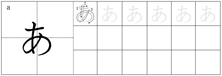
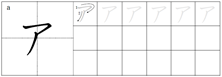
ひらがなとカタカナの両方が含まれています。
26ページB5
|
|
|
ひらがな カタカナの勉強を始めましょう。まずは、これでウォーミングアップ。
|
|
|
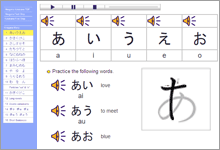
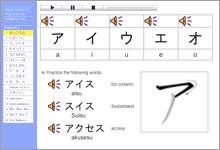
初めて日本語の文字を学習する方は ひらがなから始めてください。
|
|
|
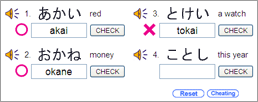
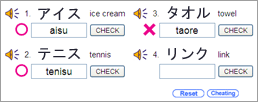
この教材は メンバー用の副教材です。
 |
 |
この教材は メンバー用の副教材です。
ひらがな カタカナ 概略
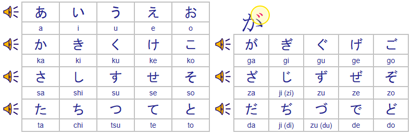
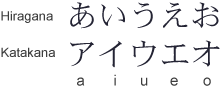
Both Hiragana and Katakana consists of 46 basic letters and several combination letters.
The vowels are a, i, u, e and o.
 |
 |
In modern Japanese, Hiragana is used for native Japanese words.
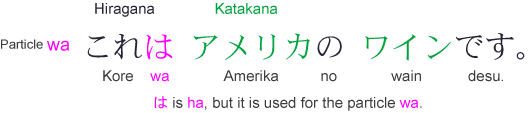
Katakana is used for loanwords (words of foreign origin) such as Amerika (America) and Wain (wine).
|
 |
|
 |
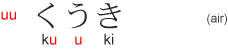
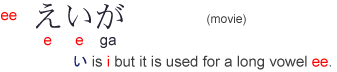
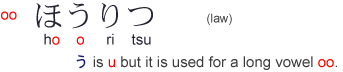
The long vowels are written in the following ways.
(See Hiragana First Step about details of the long vowels)
Hiragana
|
 |
|
 |
|
 |
|
 |
|
 |
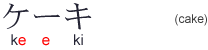
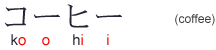
Katakana - The long vowel is indicated by a symbol " - ".
(See Katakana First Step about details of the long vowels)
|
 |
|
 |
The double consonants are indicated by the small tsu.
(See Hiragana First Step about details of the double consonants)
|
 |
|
 |
The particles wa and o are written in the following.
(See Hiragana First Step about details of the particle "wa" and "o")
|
 |
|
 |
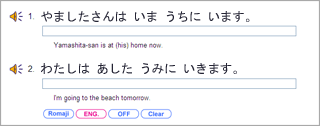
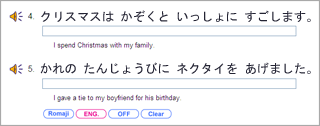
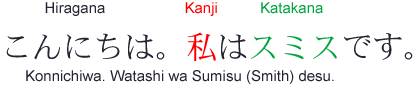
Ordinary Japanese sentences are written in the following.
(See Hiragana First Step for more example sentences with audio)
|
 |
|
 |
There is no Space between word and word in the ordinary Japanese sentence.